
Gel Nail Polish Trends 2026: Q4 Curing Lamps and Stocking
Tutorial
Key Takeaways
- Q4 2026 demand still runs on gel nail polish, but the equipment spec behind it is changing: thinner formulas, longer wear claims, more structured overlays.
- Spec curing lamps by wavelength (365+405 nm) and light density, not by the wattage printed on the shell.
- Brushless drills at 60W and above are now standard for dry cuticle work and builder gel application.
- Confirm peak-season orders by mid-August: 30-day production plus 25-35 days of sea freight leaves no slack.
12,000sqm
Smart factory under one roof
100,000+units/mo
Monthly production capacity
30days
Standard production lead time
500units
OEM MOQ for custom branding
Q4 decides the year for most nail brands. Salon books fill up in October. Gift sets move through November. And every distributor we speak with starts asking the same question in July: what do I stock, and how much? The answer in 2026 runs through gel nail polish. Soak-off color, builder gel overlays and hybrid systems are the biggest revenue lines for salons in North America and Europe, and all of them pull the same three pieces of hardware onto the bench: a curing lamp that polymerizes the coating all the way through, a drill that stays quiet under load, and extraction that keeps the station clean. Get one of those wrong and the complaints land in January, well after the returns window. We build all three in Guangzhou. Here is what is moving through our lines for the Q4 2026 season, and what buyers should be writing into purchase orders now.
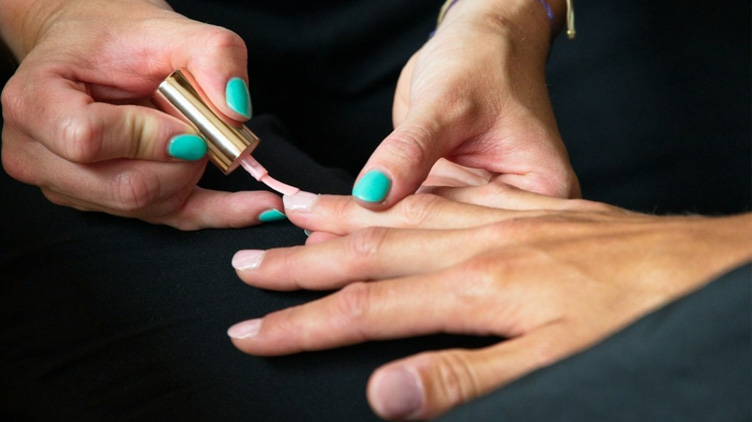
Gel nail polish in 2026: what is actually changing
Three shifts matter if you buy equipment at volume.
Formulas are getting thinner. New soak-off lines run lower viscosity and lower HEMA, which cures well but needs even UV energy across all five fingers. A hot spot on the index finger and a dead zone on the pinky produce the same complaint: peeling at the free edge.
Wear claims are getting longer. A two-week gel manicure is now sold as a three-week gel manicure. Clients come back later and expect the base layer to still be intact, which puts more pressure on the initial cure than it did two seasons ago.
Structured overlays moved from specialty to default. More techs do dry cuticle work and builder gel on every appointment, so drill hours per client are up. In our factory, that shows up as steady demand for brushless handpieces and cordless lamps on the same purchase order.
No single spec change covers all three. But two categories carry most of the risk: lamps and drills.
💡
Read the cure window on the bottleMost gel manicure polish sold in 2026 lists a 30 to 60 second cure per layer. If your lamp needs 90 seconds to get a hard surface, it is underpowered for the formula, not the other way around.
Curing lamps: wavelength matters more than the wattage on the box
A 120W lamp and a 48W lamp cure the same gel in the same time when the light actually reaches the nail plate evenly. Wattage is a proxy for output, never a guarantee of it. The specs that decide results are wavelength, light density, and reflector geometry.
Dual wavelength output at 365+405 nm covers both the photoinitiators in current soak-off gel polish and the older camphorquinone systems still sitting in salon drawers. A 365 nm only lamp can leave older product tacky underneath while the surface looks cured and hard.
We run a precision reflector cup across the full curing lamp range. It costs more to tool and it removes the hot spots that cause heat spikes on thin nails, which is the number one complaint techs file about high-power lamps.
Battery capacity is now a buying criterion. Cordless lamps went from novelty to baseline between 2023 and 2025. Techs cure a flash layer while the client's hand is still on the table, then move to the next step without hunting for an outlet. Cell size decides whether that rhythm survives a full shift or dies at hour three.
A note on traditional product: layering regular nail polish on gel nails will chip within days, because the two systems flex differently. Salons that offer both should keep the services separated at the booking stage, not the bench.
Cordless lamps and the gel manicure workflow
For salons that do the majority of their nails by gel, a second lamp per station is cheaper than idle time. Small flash units handle base and top layers on the move. The 96W and 120W units stay plugged in for full sets and refills.
What a gel manicure station should hold
One high-output lamp, one flash lamp, and a spare battery pack. That covers back-to-back bookings without a client sitting under a lamp that is waiting to recharge.
| Model | Power | Light source | Wavelength | Battery |
|---|---|---|---|---|
| ES-603 flash lamp | 3W | 1 bead | 365+405 nm | 600mAh |
| ES-602 flash lamp | 9W | 3 beads | 365+405 nm | 2000mAh |
| ES-601 | 96W | 48 lights | 365+405 nm | 2600mAh |
| ES-601PRO | 120W | 48 lights | 365+405 nm | 5200mAh |
| ES-606 | 115W | 45 beads | 365+405 nm | 5200mAh |
⚠
Peak draw is not sustained outputUnbranded lamps often quote peak power for a fraction of a second. Ask for the wavelength chart and a light-density reading at 10 mm. If a supplier will not send either, the spec is marketing.
✓ Pros
- A 5200mAh cell covers a full 8-hour shift at typical 30-second cure times.
- Cordless units clear cable clutter from small two-station rooms.
- Techs save 4 to 6 seconds per curing step, which compounds across a full book.
✗ Cons
- Lithium cells lose capacity after roughly 500 full cycles, so plan a spare-parts line.
- High-draw flash lamps still need a powered base if used continuously all day.
- Battery replacements add a warranty touchpoint distributors have to staff for.
Drills: brushless motors are the default for structured gel manicures
Dry cuticle work changed the requirements. A tech doing Russian-style prep runs the handpiece at 25,000 to 35,000 rpm for 20 minutes straight with almost no downward pressure. That is a heat test and a vibration test at the same time.
Carbon brush motors handle it. Brushless motors handle it better. Our own bench testing shows roughly 50% less vibration at the handpiece with the brushless architecture, and that matters when the bit is 1 mm from the sidewall.
Two models carry most of the Q4 order book. The ES-201 is a 60W brushless rechargeable with a 2600mAh cell, 12 hours of battery life and a 2-hour charge. The ES-417 runs 110W brushless at 0-40,000 rpm on corded power, built for high-volume chairs that never cool down.
Beginners should stay at 25,000 rpm or below until their hand is steady. Professionals doing overlays will want the higher-torque units, because the rpm readout on a weak motor drops the moment the bit touches product.
The full nail drill line covers 10W to 110W, carbon brush and brushless, corded and cordless. Match the motor to the service mix, not to the price sheet.
Spindle and collet wear
Change the collet every 200 hours of use. Most techs wait too long, then blame the drill for wobble that a $2 part caused.
Dust collection: salons are replacing single-function units
File dust is the complaint that closes a salon review page fastest. That pushed 2-in-1 units, drill and vacuum in one housing, from a nice-to-have into standard kit for new stations.
Centrifugal fan designs hold airflow better as the filter loads. That is the difference between a collector that pulls filings at 9 a.m. and one that has stopped pulling them by 2 p.m. Axial fans lose suction much faster once the bag fills.
ES-801 runs a 65W centrifugal fan at 0-3,500 rpm. The ES-801P adds the 2-in-1 configuration at 85W. ES-806B pushes 0-4,000 rpm from 60W and carries a 2600mAh battery for portable stations and mobile techs.
Pair every drill station with extraction above 60W. Below that, salons notice dust settling on the curing lamp within a week.
Filter changes drive repeat parts orders
A busy two-chair salon replaces filters every 4 to 6 weeks. Distributors who bundle filters with the dust collector series see steadier reorder cycles than those who sell the unit alone.
Peak-season stocking: the order date matters more than the discount
Every year we get the same email in late September. Can you ship 2,000 units in three weeks? Sometimes we can. Usually the answer involves air freight and a margin the buyer did not budget for.
Standard production lead time is 30 days. First-time custom tooling for a new logo or color adds 1-2 weeks before that clock starts. Then sea freight from Guangzhou runs 25 to 35 days to the US West Coast, and November port congestion adds another 7 to 10 days on a bad year.
The math is unforgiving. Work backwards from your shelf date.
For a gel nails program launching with a new brand identity, the prototype round is the step that surprises buyers most. Pantone approvals alone can eat a week if two departments have to sign off.
| Stage | Typical time | Note |
|---|---|---|
| Prototype and new tooling | 1-2 weeks | Required for first-time custom color or logo |
| Production run | 30 days | MOQ from 500 units |
| Custom packaging and labeling | Runs inside production | Multilingual manuals, EU/UK/US/AU plug options |
| Sea freight, Guangzhou to US West Coast | 25-35 days | Port congestion in November adds 7-10 days |
| Total, order to shelf | 11-14 weeks | Confirm by mid-August for a November shelf date |
✓
August, not OctoberPlace Q4 orders in August. Custom color matching and packaging artwork take longer than most buyers expect, and the factory calendar fills first on 96W and 120W lamp models.
Frequently Asked Questions
Does a higher wattage curing lamp cure gel nail polish faster?
Not on its own. Curing speed depends on light density at the nail plate and matching the wavelength to the photoinitiator in the formula. A 96W lamp with a proper reflector cup will out-cure a 120W lamp with uneven output. Check the 365+405 nm dual wavelength spec first, then ask for the light-density reading.
What RPM should a salon use for a gel manicure?
Most techs work at 20,000 to 30,000 rpm for surface and product removal, then drop to 8,000 to 15,000 rpm around the cuticle and sidewalls. A brushless handpiece holds torque better, so the rpm readout stays accurate when the bit contacts product instead of stalling.
How many curing lamps does a salon need per station?
One high-output lamp per station if you book back-to-back clients. Sharing a single lamp between two chairs costs more in idle time across a month than a second lamp costs to buy, and it forces longer cure cycles that clients notice.
When should distributors place Q4 stocking orders?
Mid-August. Production runs 30 days, sea freight adds 25 to 35 days, and November port delays can push delivery past the selling window entirely. Orders confirmed in September usually ship by air and lose most of the margin.
Can I order gel polish equipment under my own brand?
Yes. MOQ starts at 500 units with custom logo, any RAL or Pantone color, your choice of packaging, plus EU, UK, US, AU or Type-C plugs and multilingual manuals. Prototype lead time is 1-2 weeks and full ODM support is available for buyers who want a new housing design.
Key Takeaways
- Confirm Q4 orders by mid-August. Production is 30 days and sea freight adds another 25 to 35.
- Spec lamps by wavelength (365+405 nm) and light density. A wattage sticker tells you nothing about cure.
- Stock brushless drills at 60W and above for structured gel work, and keep one 110W corded unit for the busiest chair.
- Pair every drill station with a centrifugal dust collector above 60W, or a 2-in-1 unit where bench space is tight.
Conclusion
Q4 2026 will not be won on price alone. It will be won by brands that ship a lamp which cures correctly the first time, a drill that does not shake in the tech's hand, and a collector that still pulls dust in week six. Send us your target spec sheet and retail price point. We will come back with a prototype in 1-2 weeks and a confirmed production slot for a 30-day run, from a 12,000sqm factory that has been shipping nail equipment since 2012.