
UV Nail Lamp Buying Guide 2026: Wattage, Cure Time & Safety
Tutorial
Key Takeaways
- Wattage is peak output, not cure speed. Bead count and array geometry decide whether the whole nail cures evenly.
- Dual wavelength 365+405nm covers the photoinitiators used in current gel formulations. Single-wavelength lamps undercure at the base layer.
- For mobile techs, battery capacity matters more than wattage. 2600mAh and up covers a full appointment day.
- Ask any supplier for bead count, reflector cup material, and LED binning data before you compare prices.
- ELESECRET builds nail lamps from 3W flash units to 120W cabinets, with OEM MOQ from 500 units and 1-2 week prototypes.
35SKU variants
Nail lamp models in the line
120Wpeak output
Highest-power lamp (ES-601PRO)
100,000+units/mo
Factory production capacity
13years
OEM/ODM experience since 2012
A uv nail lamp is the one piece of salon equipment your clients sit under for two minutes, forty times a day. Get the spec wrong and you get undercured gel, heat spikes on the nail plate, and lamps that fail at month eight. We build these units in Guangzhou, so we read the failure reports that come back. Since 2012 we have shipped nail lamps from 3W pocket flash units up to 120W corded cabinets, and the buying mistakes have barely changed. This guide covers wattage, cure time, and the safety details that actually show up in warranty claims.
What wattage actually means on a uv nail lamp
Wattage is the cheapest number to print on a box. It is also the easiest one to inflate. A 96W lamp with 48 LEDs spaced evenly behind a reflector cup pushes energy across the whole nail plate at once. A 120W lamp squeezed into a narrow cluster can leave the little finger half-cured while the index finger gets hot.
Read three numbers together: total watts, LED bead count, and peak wavelength. Our ES-601 runs 96W through 48 beads at 365+405nm. The ES-601PRO drives 120W through the same 48-bead array with a 5200mAh cell behind it. That extra headroom is built for thick builder gels and hard gels, where one cycle at lower power leaves a tacky layer.
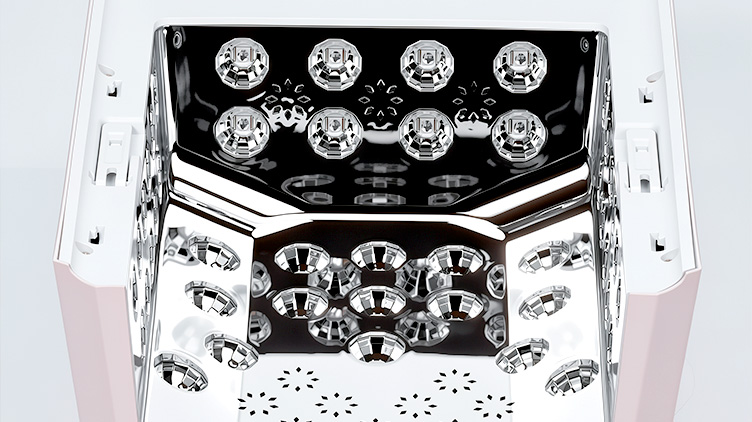
Small flash units follow the same logic at a different scale. The ES-603 carries 1 bead at 3W and a 600mAh cell. It is a single-nail repair tool, not a full-set lamp. Salons that buy it as a primary unit come back for a cabinet within a month.
| Model | Power | LED beads | Wavelength | Battery |
|---|---|---|---|---|
| ES-603 | 3W | 1 | 365+405nm | 600mAh |
| ES-610 | 18W | 3 | 365+405nm | 2000mAh |
| ES-601 | 96W | 48 | 365+405nm | 2600mAh |
| ES-601PRO | 120W | 48 | 365+405nm | 5200mAh |
| ES-606 | 115W | 45 | 365+405nm | 5200mAh |
⚠
The 120W trapA high wattage figure does not guarantee a faster cure. Ask the supplier for bead count, array geometry, and whether the reflector cup is a machined part or a molded afterthought. If they cannot answer, the number on the box is marketing.
Cure time: how to read a spec without a lab
Published cure times are usually measured on a clear gel under ideal conditions. Salon conditions are not ideal. The gel has pigment in it, the client has cold hands, and a lamp that has run for three hours is not the lamp that just came out of the box.
Three variables drive real cure time. Irradiance at the nail surface, measured in mW/cm2. Wavelength match to the gel's photoinitiator. Distance from bead to nail plate.
Distance is the one buyers ignore. A table unit like the ES-610 holds 3 beads at 18W above the hand at a fixed gap, so cure time stays consistent across a shift. A handheld flash unit gets moved around by the tech, and that gap changes every single time.
A cure test you can run in ten minutes
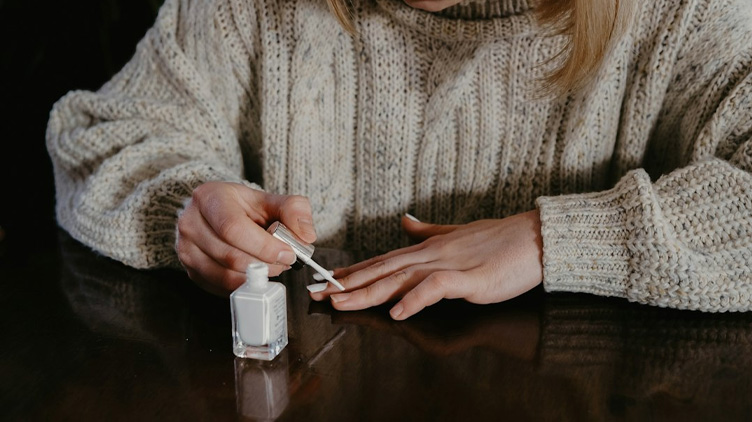
Smear your best-selling gel on a clear swatch and cure it for the stated time. Press a cotton pad soaked in acetone on the surface for 30 seconds. If the top dulls or smears, the lamp is undercuring that specific gel. Run the test on every candidate lamp before you commit to a container load. It costs you ten minutes and one swatch.
Why 365nm plus 405nm matters
The 405nm channel cures most modern photoinitiators, including the TPO alternatives that replaced older chemistry in EU formulations. The 365nm channel reaches deeper into the base layer. A nail uv light with only one wavelength will produce lifting at the free edge in about two weeks, which is exactly when your customer calls.
Safety specs that show up in warranty claims
Safety starts at the emitter, not the cabinet. UV light bulbs for nails emit in the UVA band, mostly 365nm to 405nm. UVA penetrates deeper than UVB and does not cause a visible sunburn, so clients rarely notice exposure. That does not make it harmless. The FDA's nail care products guidance and the AAD both flag repeated UVA exposure to hands and cuticles as a real concern for technicians who work under these lamps all day.
Two design choices cut exposure. A motion sensor or shutter that kills output when the hand leaves the cavity. A precision reflector cup that aims energy at the nail plate instead of spilling it onto surrounding skin.
We put 5% of annual revenue back into process upgrades, and a meaningful share of that goes into LED binning and reflector tooling. It is less exciting than a bigger wattage label and it reduces returns more than any spec sheet line.
Corded or cordless gel manicure uv lamp
This is the decision that splits most purchase orders. Cordless wins for mobile techs and small studios without spare outlets. Corded wins when you need maximum output for hard gel and you want a ten year service life with no cell replacement.
A gel manicure uv lamp with a 2600mAh cell covers a full day of standard appointments. Our ES-219, ES-220, and ES-230 all sit at that capacity with 11 to 12 hours of rated runtime.
Lithium cells do age. Expect reduced runtime after roughly 18 months of daily charge cycles, and plan your warranty language around that.
✓ Pros
- Cordless units let a mobile tech work client-side without hunting for an outlet.
- A 2600mAh cell covers a full appointment day on most of our flash and cabinet models.
- Removing the power cable eliminates the single most common hardware failure we see on corded stations.
✗ Cons
- Battery cells degrade, and runtime drops noticeably after about 18 months of daily charging.
- Peak wattage is capped by cell size, so thick hard-gel work takes longer per cycle.
- Shipping loose lithium cells across borders adds customs paperwork for regional distributors.
Specifying a uv light for nails order
Buyers who source at volume should treat the lamp as three separate purchases: the emitter array, the housing, and the power system. Spec each one.
On the array, ask for binning data and a wavelength tolerance. On the housing, ask for the reflector material and the ABS grade. On power, ask whether the cell is replaceable and what the connector standard is.
ELESECRET runs MOQ from 500 units on custom orders. Prototypes ship in 1-2 weeks and production runs about 30 days. Customization covers logo, any RAL or Pantone color, six packaging formats, and plug types for EU, US, UK, AU, and Type-C. Every unit leaves with CE, FDA, RoHS, and ISO 9001 documentation behind it.
💡
Pair the lamp with the right drillLamp complaints often trace back to prep, not cure. An under-prepped nail plate holds moisture and the gel lifts regardless of how good the lamp is. Budget for a brushless unit in the 60W to 110W range if your buyers run high-volume salons.
Frequently Asked Questions
What wattage uv nail lamp should a salon buy?
For standard gel polish on natural nails, 48W to 96W with at least 40 LED beads is enough. Salons doing hard gel, builder gel, or acrylic finishing should move to the 110W to 120W range. Bead count and array spacing matter more than the headline wattage number.
How long should a gel manicure uv lamp cure each coat?
Most modern gel polishes specify 30 to 60 seconds per coat under a properly matched lamp. Base and top coats often need the longer end. Always run an acetone rub test on your own gel before you trust a published cure time, because pigmented and dark shades need more energy than clear ones.
Are uv light bulbs for nails safe for skin?
They emit UVA in the 365nm to 405nm range, which does not cause sunburn but does penetrate the skin. Regulators including the FDA note that repeated exposure is a consideration for technicians working under lamps daily. Manufacturing gloves and a lamp with a motion sensor reduce exposure meaningfully.
Do I need a rechargeable uv lamp?
Only if your buyers work mobile or lack fixed stations. A rechargeable ultraviolet nail lamp with a 2600mAh cell handles a normal appointment day. Fixed salons get longer service life and higher peak output from a corded cabinet.
What is the MOQ for a custom-branded nail uv light?
ELESECRET starts OEM orders at 500 units. Prototype lead time runs 1-2 weeks and full production takes about 30 days. Logo, housing color, packaging, plug type, and multilingual manuals are all customizable on the same order.
Key Takeaways
- Compare bead count and wavelength before wattage. A 96W lamp with 48 evenly spaced beads outperforms a badly spaced 120W unit.
- Run the acetone rub test on your own gel before you place a container order. It catches undercuring in under ten minutes.
- Spec the emitter array, housing, and power system as three separate line items in your RFQ.
- Confirm battery cell replaceability on cordless models. This one question decides your after-sales cost over a three year cycle.
Conclusion
Start with the gel your market actually sells, then work backward to the lamp spec. If your buyers run mostly gel polish, a 48 to 96W cabinet with dual 365+405nm output and 48 beads covers the bulk of orders. If they finish hard gel daily, go to the 120W tier and budget for the higher unit cost. Send us your target gel brand, your target retail price, and your annual volume. We will match a lamp spec from the 35-model line and quote an OEM build at 500 units with a prototype in 1-2 weeks.