
Cat Eye Nails 2026: What the Trend Does to UV Lamp Demand
Tutorial
Key Takeaways
- Cat eye nails moved from seasonal add-on to standard salon service, and the narrow curing window is what actually stresses a lamp's specs.
- Magnetic nail polish needs 5 to 10 seconds of high-irradiance flash cure to lock the particle line before the gel self-levels.
- Dual-wavelength 365+405nm output matters more than raw wattage for cateye nails, because photoinitiator response varies by formulation.
- Cordless lamps with 2600mAh cells run flat mid-service on back-to-back sets. The 5200mAh units (ES-601PRO, ES-606, ES-E607) cover a full shift.
- Distributors should spec 96W and above, and demand irradiance data across the whole hand plate, not just the center.
35SKUs
Nail lamp variants in our line
120Wpeak output
ES-601PRO, our highest-output lamp
12,000sqm
Factory area in Guangzhou
1-2weeks
Prototype lead time for custom lamps
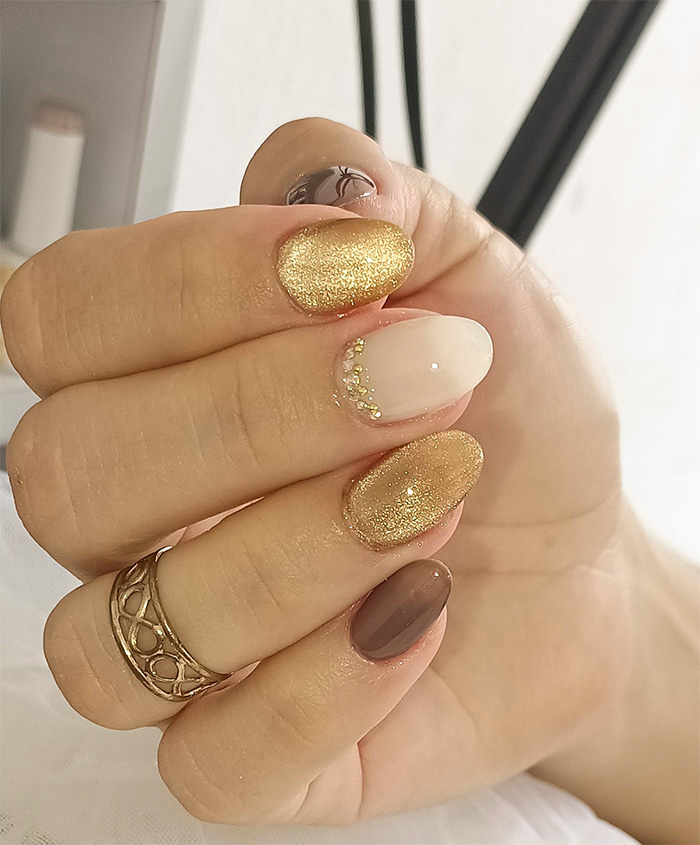
Cat eye nails stopped being a party trick. In 2026 they are a menu standard in most salons we ship to, and that changes what a UV lamp has to do. A cat eye set has a curing window measured in seconds, not minutes. Miss it and the pattern smears into a grey blur. That single constraint is pushing buyers toward higher-output lamps, faster flash cycles and tighter energy uniformity across the hand. Cat eye nail polish is chemistry, and the lamp is the timing mechanism. Get the timing wrong and no amount of magnet technique saves the set.
Why cat eye nails changed the lamp conversation
Three years ago a tech might do two cateye nails sets a week. Now it is two before lunch. Volume exposes hardware weaknesses that occasional use hides. The magnet work is the visible part. The invisible part is the cure. Magnetic nail polish holds coated iron-oxide particles in suspension, and those particles keep drifting after the magnet is lifted. The gel is still liquid. Gravity and surface tension pull the line apart. A lamp that cures slowly does not only cost time. It costs pattern definition, and the client sees that in the mirror before they leave.
The 8-second window inside every cat eye set
Here is the sequence we watch in the field. A tech applies magnetic nail enamel, holds the magnet for 5 to 15 seconds depending on gel viscosity, then cures. If that first cure step runs 60 seconds at low irradiance, the line has already spread. The fix is a two-stage cure. Flash cure for 5 to 10 seconds at high output to freeze the particle alignment, then a full 30 to 60 second cure for the base layer and top coat. Dual-wavelength output at 365+405nm handles both stages. The 405nm band drives most modern magnetic gel photoinitiators. The 365nm band reaches through thicker application layers where 405nm energy alone gets absorbed. Not every lamp does this well. A 48W unit with wide bead spacing can flash-cure the center of the hand in 6 seconds and the outer fingers in 14. That gap is enough to lose a pattern on the pinky.
💡
Slide the magnet out, do not lift it offPlace the hand under the lamp first, then slide the magnet away while the first 5 seconds of output are already hitting the gel. Removing the magnet before the lamp starts adds 2 to 4 seconds of uncontrolled flow, and that is where most blurred cat eye sets come from.
Matching lamp output to cat eye gel polish
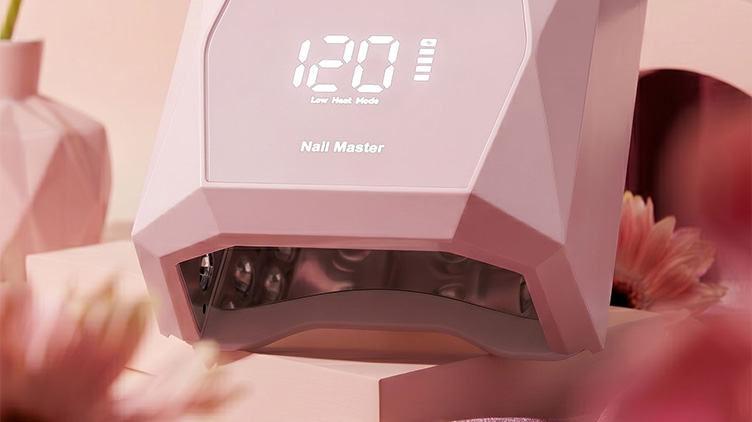
For salon work, 96W is the practical floor for a cat eye service. Below that, flash cure cycles get long enough that pattern definition drops. Above 115W the return is mostly in cycle time rather than quality, unless the same lamp is curing thick builder layers. Here is how the current line stacks up for magnetic nail polish work.
Energy distribution beats peak wattage
Two lamps rated 96W can produce very different results. The variable is the reflector cup behind each LED and the spacing between beads. We build our arrays with a precision reflector cup system so irradiance across a 10cm span stays inside a narrow band. That is the number deciding whether all five fingers cure in the same 30 seconds. In our Guangzhou facility we measure irradiance at nine points across the hand plate before a lamp design is signed off. A lamp that passes a center-only test can still fail a pinky.
Where a flash lamp fits
Compact flash units like the ES-602 at 9W are not replacements for a 96W main lamp. They are pattern locks. Some techs keep one on the desk for the 5 second freeze, then move the hand to the larger lamp for the full cycle. It adds a step and cuts rework on complex art.
| Model | Power | LED count | Wavelength | Battery |
|---|---|---|---|---|
| ES-601 | 96W | 48pcs | 365+405nm | 2600mAh |
| ES-601PRO | 120W | 48pcs | 365+405nm | 5200mAh |
| ES-606 | 115W | 45pcs | 365+405nm | 5200mAh |
| ES-E607 | 96W | 48pcs | 365+405nm | 5200mAh + USB out |
| ES-602 (flash) | 9W | 3pcs | 365+405nm | 2000mAh |
Cordless lamps and the battery math
Cordless is now the default for mobile techs and for stations with limited outlets. The constraint is not the LED array. It is the cell. A 2600mAh pack, like the one in the ES-601, covers roughly 4 to 6 full-manicure cures at 96W before it needs a charge. Back-to-back cat eye sets with a flash cure on every hand drain it faster. The 5200mAh packs in the ES-601PRO, ES-606 and ES-E607 roughly double that runtime, and the ES-E607 adds a 5V 2A USB output so it doubles as a phone charger at the station.
✓ Pros
- 5200mAh units cover a full shift without a mid-service charge.
- Every lamp in the current line runs dual wavelength 365+405nm, so one unit handles base, color and top coat.
- The ES-E607 USB output removes a separate phone charger from a crowded station.
✗ Cons
- 2600mAh packs need a top-up between clients on heavy cat eye days.
- Peak output on any battery lamp drops as the cell depletes, so flash cure timing has to be rechecked late in the shift.
What this means for distributors sourcing in 2026
Buyers who treat lamps as a commodity line will take damage from this trend. Cat eye service quality is visible to the client within minutes, and the complaint lands on the brand printed on the box. If you are building a cat eye ready range, spec lamps at 96W or above with dual-wavelength 365+405nm output. Ask suppliers for irradiance data across the full hand plate, not a single center reading. Ask for a low-heat mode as well. Some clients have thin or damaged nails and cannot take full output for a 60 second cycle. Our OEM program starts at 500 units, with 1 to 2 week prototype turnaround and 30 day production on confirmed orders. Custom logo, color matched to any RAL or Pantone reference, plug types for EU, UK, US and AU, and multilingual manuals are standard options rather than add-ons. Every unit ships with CE, FDA, RoHS and ISO 9001 documentation.
Frequently Asked Questions
Do cat eye nails need a special UV lamp?
No, but the lamp needs enough output to flash cure in under 10 seconds and consistent energy across the whole hand. A 96W lamp with dual-wavelength 365+405nm output is the practical starting point. Anything under 48W will work for a single nail at a time, not for a full set on a paying client.
How long do you cure magnetic nail polish?
Two stages. Flash cure 5 to 10 seconds at full output to lock the particle line, then a full cure of 30 to 60 seconds to set the layer. Thicker gel applications and builder layers push the second stage toward the 60 second end.
Does magnet strength matter more than lamp power for cat eye nails?
They control different things. Magnet strength and hold time set how sharp the line is. Lamp output decides whether that line survives. A strong magnet with a slow lamp still produces a blurred result, which is why techs upgrade the lamp first.
What wavelength cures cat eye gel polish
Most magnetic gel formulations respond to 405nm, with 365nm helping on thicker layers. Lamps that output both bands cover the widest range of brands without changing hardware.
Can I run a 96W cordless lamp on a full shift
With a 5200mAh pack, yes for most single-tech stations. A 2600mAh pack typically needs one top-up during a busy day. Check the battery spec before comparing cordless lamp prices, because the cell is most of the runtime difference.
Key Takeaways
- Spec lamps at 96W or above with 365+405nm dual wavelength before you quote a cat eye service kit.
- Request irradiance data at multiple points across the hand plate, not a single center figure.
- Treat battery capacity as a line item: 5200mAh for full-shift cordless use, 2600mAh for light stations.
- Ask your supplier for a low-heat mode, since thin or damaged nails cannot take full output for 60 seconds.
Conclusion
Cat eye nails will keep selling through 2026 because the result photographs well and the technique is teachable. The hardware behind it is less forgiving. If your current lamp line tops out at 48W with single-wavelength output, you are one viral trend away from a complaint queue. Send us your target market and price band, and we will return a lamp spec sheet with irradiance data, battery options and OEM customization costs within two weeks.