
Nail Drill vs Nail File: Which Tool Do You Actually Need?
Tutorial
Nail Drill vs Nail File: Which Tool Do You Actually Need?
Nail drill vs nail file: compare speed, precision, cost, and safety. Learn which tool suits your salon workflow. Expert tips from ELESECRET engineers.
nail drill nail file manicure tools salon equipment
TL;DR
Key Takeaways- Nail drills cut acrylic and gel up to 5x faster than hand filing, slashing removal time by 80%.
- Hand files offer precise tactile control that protects natural nails from over-filing.
- Brushless motors (like ELESECRET's) deliver 40% longer lifespan and safer low-speed torque.
- Most professional salons use both tools: drills for product removal, files for finishing.
40,000RPM
Maximum Drill Speed
80%time saved
vs. Hand Filing
110W
Flagship Motor Power
40%longer
Brushless Motor Lifespan
Few debates in professional nail care are as persistent — or as misunderstood — as nail drill vs nail file. As an engineering-driven manufacturer with 13 years of OEM/ODM experience and 100+ active patents, we've pressure-tested both tools with salon partners across 30+ countries. The verdict? It's not either/or. Each tool excels in specific jobs that the other cannot match. Here's your data-backed guide to choosing — and using — both effectively.
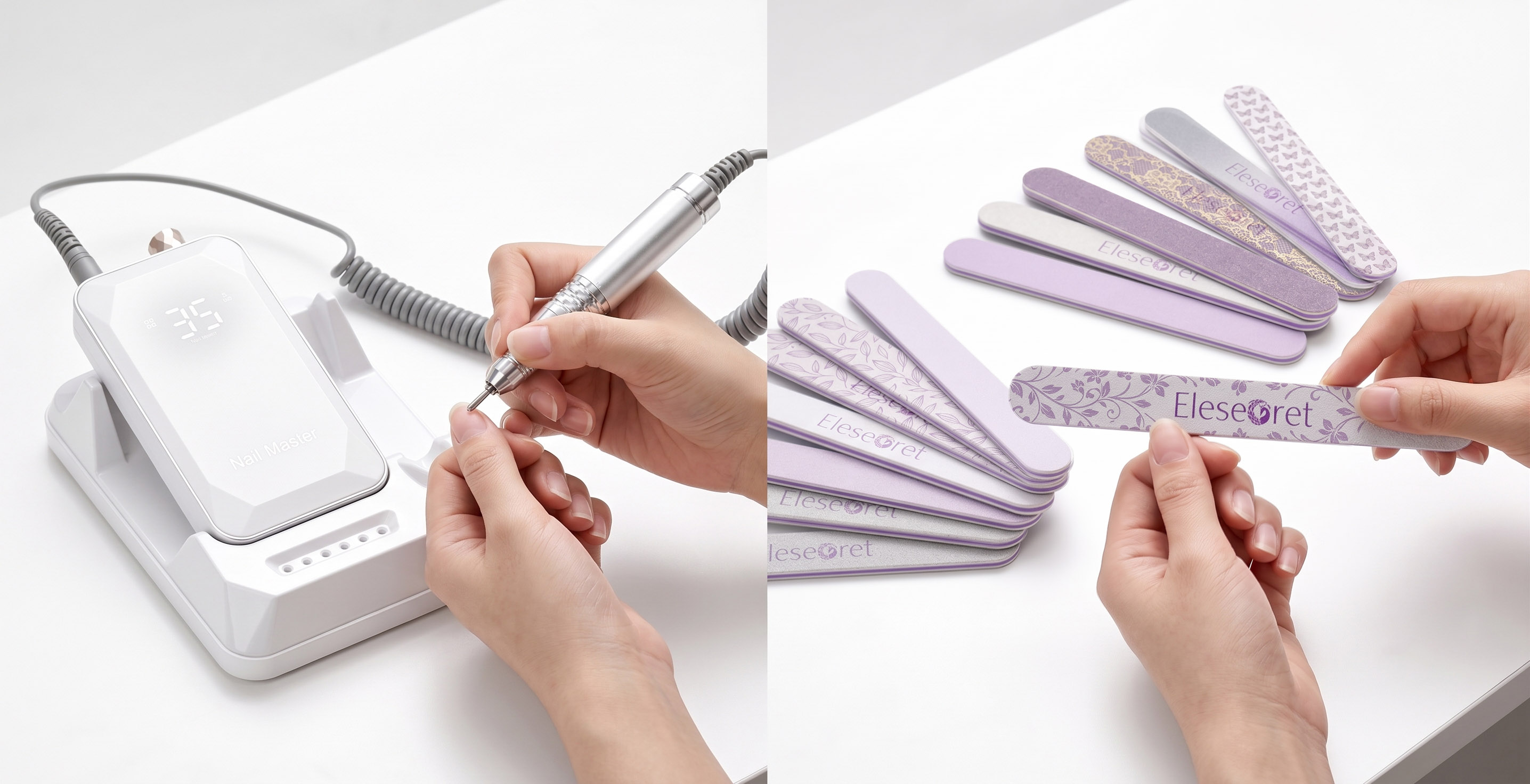
Nail Drill vs Nail File: Key Differences at a Glance
A nail drill is an electric rotary tool that powers interchangeable carbide, ceramic, or diamond bits at speeds up to 40,000 RPM. It is engineered for aggressive material removal — acrylic overlays, hard gel reduction, and callus work. A hand nail file is a manual abrasive tool (glass, metal, or paper board) that shapes and buffs at hand-generated speed. Its greatest asset is tactile feedback: the technician can feel subtle thickness variations that signal exactly when to stop filing. This makes hand files a precision instrument for natural nail preparation and final finishing.
| Feature | Nail Drill | Hand Nail File |
|---|---|---|
| Power Source | Electric motor (60W–110W) | Manual effort |
| Speed Range | 0–40,000 RPM | ~300–600 strokes/min |
| Learning Curve | Moderate-to-high | Minimal |
| Best For | Acrylic/gel removal, callus work | Natural nail shaping, buffing |
| Cost per Tool | $50–$500+ | $1–$20 |
| Lifespan | 3–5 years (brushless) | Days to months |
Speed & Efficiency: Why Drills Win the Time Battle
Time is client throughput in a busy salon. Hand filing acrylic removal takes 20–35 minutes per set. A high-torque nail drill like the ELESECRET ES-417 (110W, 0–35,000 RPM) completes the same removal in 3–7 minutes — an 80% reduction in treatment time. Over a 12-client day, that difference frees up 4–5 hours of added capacity. High-speed drills also reduce the physical strain of repetitive filing motions, allowing technicians to serve more clients without fatigue.
The Brushless Motor Advantage
Not all drill motors are equal. ELESECRET's self-developed brushless motors deliver 40% longer lifespan than brushed alternatives, sustain torque at low speeds without stalling, and run with minimal vibration. That means consistent cutting performance without the 'burning nail' sensation clients dread. For distributors, this translates into fewer returns, longer service intervals, and stronger repeat business.
💡
Pro Speed-Setting Tip
Always set the drill between 10,000–15,000 RPM for acrylic removal. Higher speeds generate friction heat that can damage the nail plate. Low torque at the right speed still cuts 5x faster than hand filing.
Precision & Control: When Hand Files Take the Lead
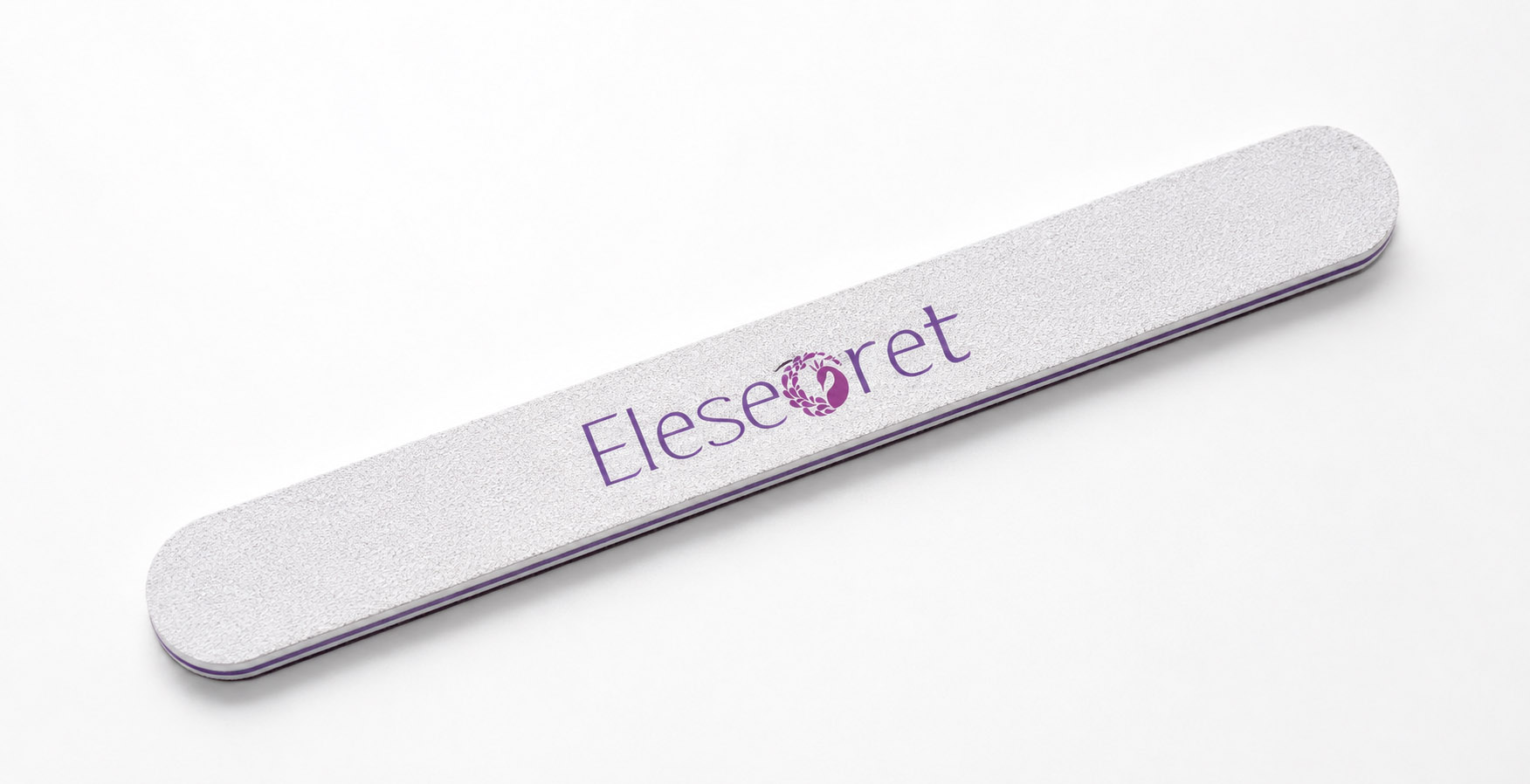
Despite the drill's speed advantage, hand files remain indispensable for natural nail work. Over-filing natural nails by even 0.1mm can cause permanent damage. Hand files give technicians sensory feedback — a subtle 'grab' when the surface is ready, a smooth glide when it's time to stop. For final shaping, cuticle refinement, and buffing the free edge, nothing beats a quality glass or ceramic file in skilled hands.
✓ Pros
- Nail drill: removes product up to 5x faster and reduces wrist strain for technicians.
- Nail drill: brushless motors like ELESECRET's sustain torque at low RPM for safe precision work.
- Nail file: offers full tactile feedback with zero learning curve.
✗ Cons
- Nail drill: requires weeks of training and a higher upfront budget.
- Nail file: extremely slow for acrylic and hard gel removal.
- Nail file: results depend heavily on individual technique and consistency.
Safety: Protecting Natural Nails in Busy Salons
Safety is non-negotiable in professional settings. OSHA guidelines for nail salons emphasize proper ventilation and dust control — one reason ELESECRET drills pair naturally with our ES-820 (80W, 5,200mAh) dust collector. When you integrate dust extraction at the drill station, airborne acrylic dust levels drop dramatically, protecting both technicians and clients from respiratory irritation.
Dust Management Is Part of Safety
Even with a drill, fine acrylic and gel dust becomes a health hazard without extraction. The ES-820's 80W motor and long battery life let technicians work cordlessly for full-shift coverage. Pairing a drill with a dust collector is the industry best practice we recommend to every salon partner.
⚠
Never Do ThisNever use a nail drill at high RPM directly on natural nails without training. Pressing a carbide bit into the nail plate at 25,000+ RPM generates friction heat that can burn the nail matrix and cause permanent damage. Keep the bit moving in short, sweeping motions — never bear down.
ELESECRET Drill Lineup: Engineering by Use Case
Every ELESECRET drill carries CE, FDA, and RoHS certifications. We manufacture in our 12,000sqm smart factory in Guangzhou with a monthly output capacity of 100,000+ units. Our 500-piece MOQ makes it easy for distributors to pilot-test inventory without overcommitting, and custom branding is available within 1–2 weeks of prototype approval.
| Feature | ES-417 | ES-417B | ES-230 |
|---|---|---|---|
| Motor Power | 110W | 60W | 60W |
| Max Speed | 35,000 RPM | 35,000 RPM | 35,000 RPM |
| Key Feature | Fastest service speed | Adjustable desktop | 3 preset memory modes |
| Best For | High-volume salons | Desktop/studio use | Multi-technician teams |
Decision Framework: Which Tool Should You Choose?
The right answer depends on your business model. Here's a practical breakdown:
- High-volume salons (60%+ gel/acrylic services): invest in 2–3 professional drills — including one backup — to protect against downtime.
- Natural-nail studios: a curated collection of high-quality hand files is your primary toolkit.
- Full-service salons: deploy both — drills for removal, files for finishing touches.
- Distributors: stock drills and professional files as complementary SKUs; our 500-piece MOQ makes pilot testing easy.
Frequently Asked Questions
What is the difference between a nail drill and a nail file?
A nail drill is an electric rotary tool that powers abrasive bits at up to 40,000 RPM for fast removal of acrylic, hard gel, and calluses. A nail file is a manual abrasive tool used for shaping and buffing. Drills excel at product removal speed, while files excel at precision finishing and natural nail control.
Can I use a nail drill on natural nails?
Yes, but only at low speeds (under 10,000 RPM) with fine-grit safety bits. Never use aggressive large-barrel carbide bits on natural nails. Hand files, or a drill fitted with a fine buffing bit, are generally the safest options for natural nail preparation.
Do professional nail technicians use both nail drills and nail files?
Yes. Most professionals use drills for acrylic and gel removal, then switch to hand files for finishing, natural nail shaping, and cuticle care. The tools are complementary — drills save time on bulk removal, files deliver the final polished result.
Which nail drill should I choose for my salon?
For high-volume salons, the ELESECRET ES-417 (110W) offers the fastest service speed and sustained torque for continuous use. The ES-417B (60W) is ideal for desktop studios. The ES-230's 3 preset memory modes simplify training and reduce errors in multi-technician teams.
Key Takeaways
- Use drills for aggressive product removal to cut treatment time by up to 80%.
- Keep hand files for natural nail finishing to prevent over-filing damage.
- Choose 60W+ brushless drills for daily salon use to avoid motor fatigue.
- Pair drills with dust collection for healthier air and longer equipment life.
Conclusion
Both tools deserve a permanent place in every professional nail station. Evaluate your service mix first: if acrylic and gel removals dominate your bookings, upgrade to a high-performance drill like the ES-417. If you're a natural-nail specialist, invest in a premium file system. Whichever path you take, ELESECRET engineering supports your business with certified, durable equipment designed to scale. Browse our drill lineup or contact our team for OEM/ODM consultation today.