
Nail Drill Maintenance: Daily Care for Salon Equipment
Tutorial
Key Takeaways
- Clean the dust collector filter daily. Packed filters push dust straight into the handpiece intake.
- Carbon brush drills need new brushes roughly every 300 to 500 running hours. Brushless models do not.
- Wipe the collet every day and replace it once the 3/32" seat starts holding grit or wobbling.
- A 60-second temperature check at full RPM catches a failing bearing weeks before it strands a client.
12,000sqm
In-house smart factory
100,000+units/mo
Monthly production capacity
100+patents
Patents held
13years
Uninterrupted parts supply
Most nail drills do not die. They get killed. Distributors send us handpieces every month that failed after eight or nine months of salon use, and when our engineers open the housing, the inside looks like a flour mill. Dust packed into the bearing race, a collet that has never been wiped, a vent grille sealed shut with acrylic filings. None of that is a manufacturing defect. All of it is avoidable. Nail drill maintenance is not complicated, but it is specific: the intervals matter, the motor type you bought changes how much work you signed up for, and the tools you keep at the station decide whether the unit lasts two years or six.
Nail drill maintenance starts with dust control
Dust kills handpieces before the motor ever fails. Most of it arrives through the intake vent rather than the collet, which is why a clogged dust collector filter matters more than a messy bench. Pair every drill with a running collector, and clean that collector on the same schedule you clean the drill.
Run this check before the first client of the day: brush the vent grille with a dry nylon brush, spin the collet by hand to feel for grit, then run the handpiece at 35,000 RPM for ten seconds with no bit loaded. If the housing warms up in ten seconds, the front bearing is already dragging.
Daily routine, roughly five minutes
- Wipe the handpiece with a lint-free cloth and 70% isopropyl alcohol. Never spray liquid into the vent slots. - Blow compressed air under 30 PSI through the grille, angled away from the bearing. - Pull the bit and brush out the collet. Check the 3/32" shaft seat for hardened dust. - Run the drill bit-free for ten seconds and listen. A rasp or click means stop and inspect.
Weekly and monthly checks
Weekly: inspect the cord strain relief, test the foot pedal, and log handpiece temperature at full RPM. Monthly: open the housing, clear the motor fan, and measure brush length on carbon brush units. In our factory we flag any drill that runs more than 15C above room temperature after a two-minute no-load run.
| Task | Frequency | Time needed | Cost of skipping it |
|---|---|---|---|
| Empty and brush the dust collector filter | Daily | 3 to 5 min | Suction drops and dust recirculates into the drill intake |
| Wipe handpiece and clean collet | Daily | 2 min | Dust hardens inside the bearing race |
| Inspect bit for wear and wobble | Every 2 to 3 clients | 30 sec | Vibration transfers straight to the motor shaft |
| Check handpiece temperature at full RPM | Weekly | 1 min | Bearing failure goes unnoticed until the drill stops |
| Replace carbon brushes | Every 300 to 500 hours | 10 min | Arcing, power loss, and scored commutator |
⚠
The filter is not optionalA drill running next to a full collector filter is breathing its own debris. On a busy day, an 80W collector can load up in under six hours. Empty it at lunch.
Brush or brushless: the maintenance load is different
Carbon brush motors are cheap to buy and cheap to keep, but they wear by design. The brushes are consumables, and the commutator under them slowly erodes. Brushless units run cooler, hold torque better at low RPM, and never need a brush swap. What they do need is clean airflow, because the electronics hate heat more than the motor does.
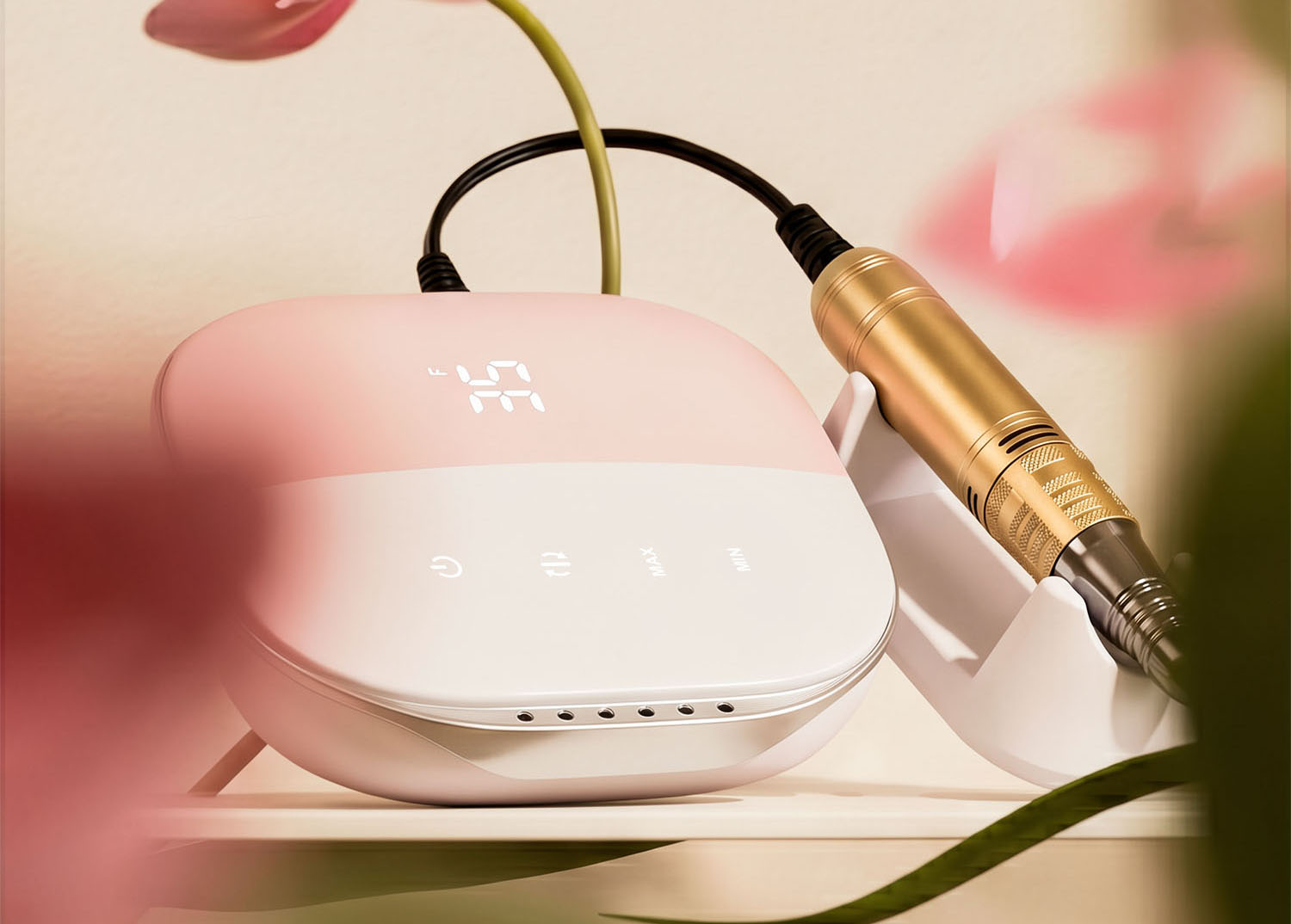
We build both. The 30W carbon brush ES-108 and the 75W brushless ES-230 leave our line with the same housing quality, and they still demand different service schedules from the salon. Buy the brushless model where daily hours are high. Buy carbon brush where the budget rules and the tech is comfortable swapping brushes.
Match the motor to the workload
A part-time tech running six clients a week will get years out of a 30W carbon brush unit. A full-time chair doing eight-hour days should be on a 60W brushless model with a 2600mAh pack, simply because the drill is running hot for most of the day.
| Model | Motor | Power | Speed | Battery |
|---|---|---|---|---|
| ES-108 | Carbon brush | 30W | 0-35000 rpm | Non-rechargeable |
| ES-119 | Brushless | 24W | 0-35000 rpm | 320mAh, 2.5H run |
| ES-220 | Brushless | 60W | 0-35000 rpm | 2600mAh, 12H run |
| ES-230 | Brushless | 75W | 0-35000 rpm | 2600mAh, 12H run |
| ES-417 | Brushless | 110W | 0-40000 rpm | Non-rechargeable |
✓ Pros
- Brushless motors eliminate brush replacement and run measurably cooler under load.
- Detachable bearing structures extend service life because the wear part can be swapped instead of the whole handpiece.
- Higher continuous output lets a 75W or 110W unit hold RPM through acrylic removal without stalling.
✗ Cons
- Brushless units cost more up front, which matters when you are stocking a 20-chair chain.
- Board-level electronics repair needs a trained technician, not a bench tech with a screwdriver.
- Carbon brush motors are quieter to service but demand a disciplined brush replacement log.
Collet, bit, and handpiece handling
The collet is where most salon-caused damage happens. Bits fit a standard 3/32" shaft, and a worn collet will let that shaft walk. Wobble at 30,000 RPM turns into heat within minutes and destroys the front bearing long before the motor is tired.
Keep the collet dry, keep it clean, and do not overtighten it. Hand-tight plus a quarter turn is enough on every model we make. A bent bit is worse than a dull one, so check the bit against a flat surface before it goes back in the handpiece.
When to replace the collet
Swap the collet when a new bit still rattles, when the shaft seat shows scoring, or after roughly 200 hours of use. Most technicians wait too long and blame the motor.
💡
Store drills upright, bits separateBits left inside a handpiece overnight can seize against the collet jaws. Store them in a bit box and reinsert clean.
Battery habits for cordless nail drills
Lithium packs age fastest when they sit at full charge in a warm room. Charge the drill, then take it off the charger. Leaving a 2600mAh pack on the dock overnight every night will cut its usable capacity within a year.
Store cordless drills at roughly half charge if they will sit for more than a week. Use the supplied Type-C cable and the rated input, not a fast charger from a phone. On the ES-119, a 0.5H charge returns 2.5H of runtime, which is enough for a light day but not for a full column of acrylic clients.
What to specify when buying drills in bulk
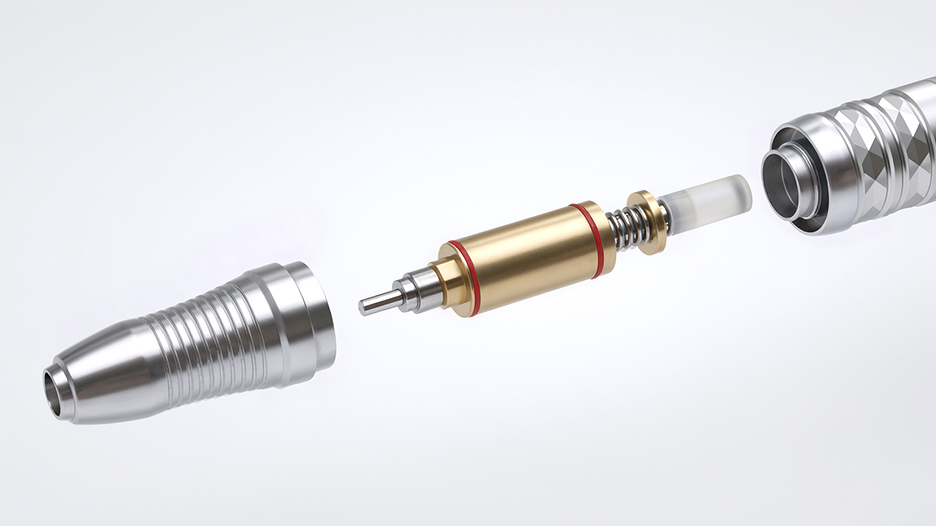
Salon equipment maintenance gets easier when the equipment is designed for it. Ask any supplier three questions before you place a bulk order: can the bearing be replaced separately, is the collet a stocked spare, and how long will parts stay available. We have held a 13-year uninterrupted parts supply across our drill range, which is the number that keeps a 20-chair chain running rather than scrapping handpieces.
Our OEM MOQ starts at 500 units, prototypes ship in 1 to 2 weeks, and production runs 30 days. Every unit is CE, FDA, RoHS, and ISO 9001 certified and carries a 1-year warranty. If you are sourcing for a regional market, ask for the certification file alongside the sample.
Frequently Asked Questions
How often should I clean my nail drill?
Wipe the handpiece and clean the collet daily. Blow out the vent grille at the same time. Open the housing monthly for a deeper clean, and check the dust collector filter before every shift because that filter protects the drill as much as it protects your lungs.
How do I know when carbon brushes need replacing?
Watch for sparking visible through the housing, a drop in RPM under load, or a motor that runs noticeably warmer than it did last month. On a professional schedule, plan a brush swap every 300 to 500 running hours and log the hours per drill.
Can I use the same routine on a brushless nail drill?
The cleaning steps are identical, but you skip brush replacement entirely. Brushless models are more sensitive to blocked airflow because the control board sits close to the motor, so the daily vent cleaning matters even more.
Why does my nail drill get hot after 20 minutes?
Usually a dragging bearing, a dusty intake, or a bit that is not seated straight. Stop, remove the bit, and run the handpiece with no load. If it still heats up within a minute, the bearing needs service.
What RPM should a beginner use?
Start around 25,000 RPM with a fine diamond bit for surface work. Move to 35,000 RPM only for backfill and cuticle work where you need consistent torque, and use a 40,000 RPM brushless unit such as the ES-417 for heavy acrylic removal.
Key Takeaways
- Clean the dust collector filter daily and empty it at lunch on full booking days.
- Log running hours per handpiece so carbon brush swaps happen on schedule, not after a failure.
- Replace the collet at around 200 hours or as soon as a new bit wobbles.
- Store cordless drills at half charge and keep them off the charger once full.
Conclusion
Build the routine into the shift, not into a Sunday deep clean that never happens. Five minutes at close, one filter empty at lunch, and a brush log taped to the station will carry a handpiece well past its warranty. If you are sourcing drills for a salon group or distributing across a region, request our spec sheets and a spare-parts list before you commit to a container.