
Electric Nail File: Brushless vs Brushed Motors Compared
Tutorial
Key Takeaways
- Carbon brush motors rely on a sliding contact that wears down. Brushless motors use a controller, so there is nothing to replace.
- Rated RPM is identical on many models. Torque under load is where a brushless motor nail file separates itself.
- Brushless handpieces cost more up front but reduce warranty returns and repair tickets for distributors.
- Match the motor to the workload: corded brushed for prep and shaping, brushless for acrylic and hard gel removal.
12,000sqm
Smart Factory Area
100,000+units/mo
Monthly Output
100+patents
Patents Held
13years
OEM/ODM Experience
Two drills sit on the same tray. One is a 30W carbon brush unit. The other is a brushless model with a 2,600mAh battery. Both are rated 0-35,000 RPM. Six months into salon use, one still holds speed and the other has been through a motor service. That gap is what this article is about. Motor type decides how an electric nail file behaves under load, how loud it runs, and how long it stays on the salon floor. We build both kinds in Guangzhou, so the comparison below comes from production data rather than a spec sheet rewrite.
What actually spins inside an electric nail file
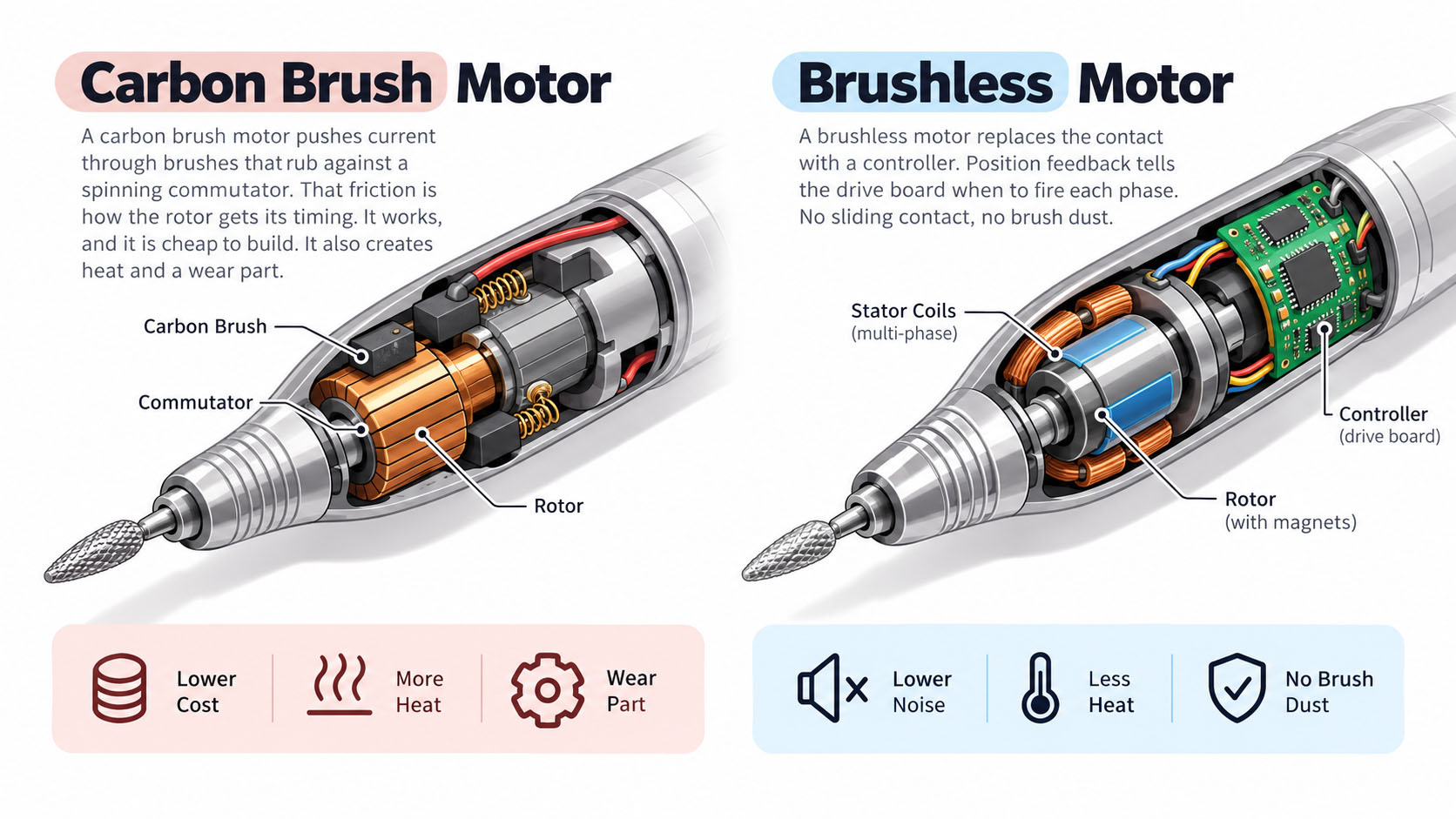
A carbon brush motor pushes current through brushes that rub against a spinning commutator. That friction is how the rotor gets its timing. It works, and it is cheap to build. It also creates heat and a wear part.
A brushless motor replaces the contact with a controller. Position feedback tells the drive board when to fire each phase. No sliding contact, no brush dust.
The spec sheet hides this distinction. Our ES-108 runs a 30W carbon brush motor at 0-35,000 RPM with a 0.12kg handpiece. Our ES-119 runs 24W brushless at the same 0-35,000 RPM, with a 320mAh battery, a 2.5 hour runtime, and a 0.125kg handpiece. Same RPM figure. Completely different tool inside.
Torque: where a brushless motor nail file wins
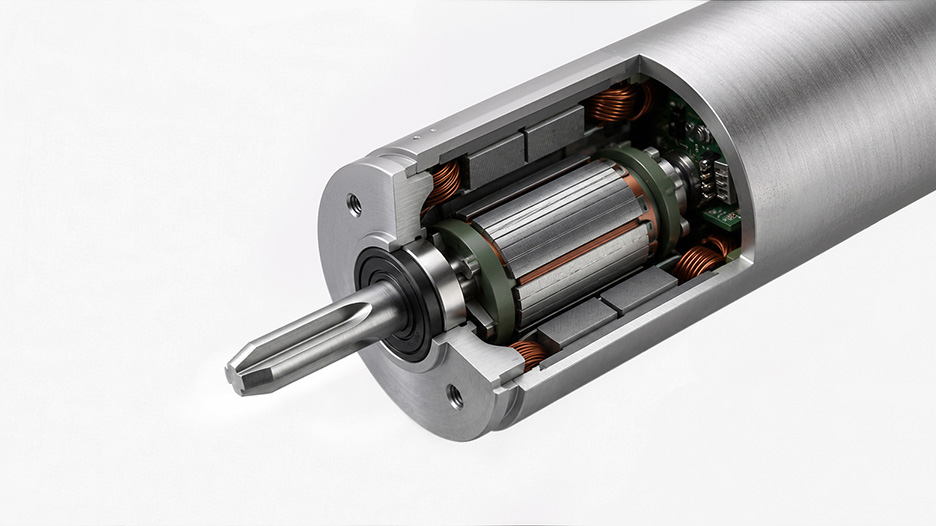
Rated RPM tells you the ceiling. Torque tells you what happens when the tech presses down.
Brushed motors lose speed as load rises. The brush and commutator are the bottleneck, and there is no feedback loop to compensate. Push a 30W brushed handpiece into a hard gel removal and the pitch drops audibly.
Brushless units close that loop. The drive board senses the slowdown and adds current to hold RPM. We tested the ES-417 at 110W across a 0-40,000 RPM range, and it holds speed through acrylic removal where a brushed unit bogs down.
For a motor nail file used eight hours a day, that consistency is the product. A tech who slows down because the tool is fading is losing appointment time.
Why a portable electric nail file behaves differently
A portable electric nail file lives or dies on its power source. Brushed cordless models often trade torque for runtime, because the battery has to feed a less efficient motor. The ES-115 is a 10W carbon brush cordless unit with a 1,000mAh battery and Type-C input, built for light shaping and travel work. Brushless cordless models do more with the same cell count. The ES-201 runs 60W from a 2,600mAh battery, delivers 12 hours of runtime, and charges in 2 hours.
Brushed vs brushless: the numbers side by side
These are two of our current models. Both are production units, not lab samples.
|
Spec |
Carbon brush (ES-108) |
Brushless (ES-201) |
|
Motor type |
Carbon brush |
Brushless |
|
Power |
30W |
60W |
|
Speed |
0-35,000 RPM |
0-35,000 RPM |
|
Power source |
AC100-240V corded |
DC 5V 2A, 2,600mAh |
|
Runtime |
Continuous (corded) |
12 hours, 2 hour charge |
|
Handpiece weight |
0.12kg |
0.18kg |
|
Wear parts |
Brushes and commutator |
Bearings only |
Noise and vibration: what clients hear
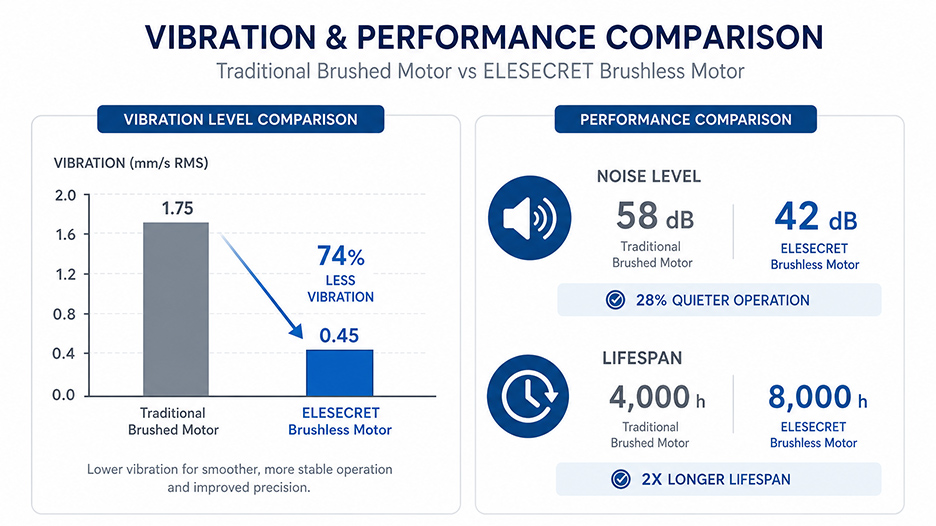
Brushes generate noise in two ways. The sliding contact itself, plus the arcing that comes with it. Add rotor imbalance and you get a handpiece that hums at a frequency everyone in the room notices.
Our brushless architecture was designed around that problem. The motors we build run with roughly 50% less vibration than the brushed equivalents in our own catalog. Less vibration also means less wrist fatigue across a six hour shift, which a working tech notices long before the decibel rating on the box.
If you are comparing units in person, run them without a bit installed. A handpiece that sounds calm at no load can still whine at 30,000 RPM once a coarse carbide bit goes in.
⚠
Do not buy brushless for every SKU
A brushless handpiece on a light prep station is wasted margin. If your end customer only does natural nail shaping and cuticle work, a corded brushed model at 30W delivers the same result for less cost. Reserve the brushless tier for acrylic, hard gel, and full removal work.
Lifespan and total cost of ownership
Brushes wear out. That is not a defect, it is the design. Every hour of use removes material from the brush and the commutator, and performance drifts down as the contact degrades.
Brushless motors delete that failure mode. The remaining wear points are the bearing and the collet, and we build both as replaceable parts. Our detachable bearing structure extends service life by more than 40% compared with a sealed assembly, because a technician can swap a bearing instead of scrapping the whole handpiece.
For a salon chain, the math is simple. A brushed unit costs less at purchase. A brushless unit at 60W or 110W costs more, runs longer per shift, and generates fewer repair requests. Distributors who track returns see the pattern inside two or three batches.
✓ Pros
- No brushes to replace and no commutator to resurface.
- Holds RPM under load, which keeps removal times consistent.
- Roughly 50% less vibration in our own motor architecture.
- Longer runtime per battery charge on cordless models.
✗ Cons
- Higher unit cost than an equivalent brushed handpiece.
- Handpieces run slightly heavier, typically 0.18kg versus 0.12kg.
- Drive board repair needs a trained technician, not a parts swap.
Choosing between brushed and brushless for your market
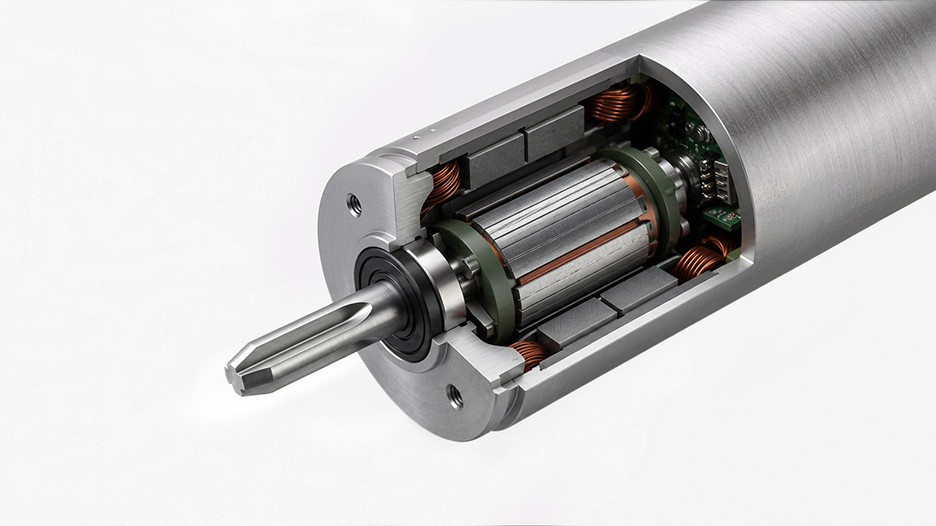
A salon doing light shaping, cuticle work, and natural nail prep can run a brushed corded unit and never notice the difference. The range on our nail drill line covers that tier from 10W up to 35W brushless options, and most salon buyers land there.
Acrylic, hard gel, and full product removal change the requirement. Buyers searching for an electric fingernail file for a high-volume table should be pushed toward brushless. The tool either holds speed through a 40 minute removal or it does not.
If you are stocking an electric nail filer in volume for a distributor catalog, carry both tiers. The entry tier wins on price comparison. The brushless tier wins on repeat purchases and fewer warranty claims, and that second number is the one that shows up in your margin at year end.
What buyers search for and what they actually need
People search for an electric file, an electric nail filer, or a nail file electric and land on the same category page. The wording changes, the job does not. A tech wants a handpiece that holds speed, stays cool in the hand, and does not return to the supplier twice a year. Every product page on our site lists motor type, wattage, RPM, and handpiece weight for exactly that reason.
Frequently Asked Questions
Does a brushless nail drill last longer than a brushed one?
Yes, and the reason is mechanical rather than marketing. A brushed motor consumes its own brushes and commutator as it runs, so output drops over time. A brushless motor has no sliding contact. Wear is limited to the bearing and collet, and on our models both are replaceable. With our detachable bearing design, service life extends by more than 40% compared with a sealed assembly.
Is brushless worth the extra cost for a small salon?
It depends on the service mix. A single-tech salon doing natural nail prep and light shaping can run a 30W corded brushed unit like the ES-108 indefinitely. A salon that removes hard gel or acrylic daily should buy brushless. Downtime costs more than the price difference, and a fading motor slows every appointment.
Can carbon brushes be replaced on a nail drill?
On most brushed handpieces, yes, though the commutator underneath also wears and cannot be restored to original condition. In practice, technicians replace brushes once or twice and then replace the handpiece. That cycle is the real cost of a brushed motor, and it is why we keep spare parts available for 13 years on every model we have shipped.
Do brushless drills run quieter?
They run smoother, which is what your clients actually hear. Removing brush contact eliminates arcing noise, and our brushless motor architecture runs at roughly 50% less vibration than the brushed equivalents in our catalog. Bearing quality and rotor balance have as much influence on final noise as motor type, so test with a bit installed before deciding.
Which ELESECRET models use brushless motors?
The ES-119, ES-201, ES-219, ES-220, ES-230, and ES-S226 are rechargeable brushless units. The ES-417 is our highest-output brushless model at 110W with a 0-40,000 RPM range, and the ES-S108 is a 48W corded brushless option. Carbon brush models cover the entry tier from 10W to 35W, including the ES-108, ES-115, ES-226, ES-260, and ES-417C.
Key Takeaways
- Specify motor type before wattage. A 30W brushless handpiece holds load better than a 45W brushed one.
- Ask suppliers for handpiece weight and bearing replacement policy. Those two details predict service life better than RPM.
- Stock both tiers if you distribute. Brushed wins the first sale, brushless wins the second.
- Run a load test at 30,000 RPM with a coarse bit before approving any bulk order.
Conclusion
Motor type is the first decision in any electric nail file purchase, and it is usually the last one buyers ask about. Brushed motors are cheap, proven, and fine for light prep work. Brushless motors cost more and hold speed where it counts. We build both at our Guangzhou factory, with a 500 unit OEM minimum, prototypes in 1-2 weeks, and 30 day production lead times. Send us your target power range and end-market price point, and we will tell you which motor architecture fits before you commit to tooling.