
Sanding Bands for Nail Drills: How to Choose Grit, Size and Mandrel Fit
Tutorial
Sanding bands for nail drills vary in abrasive grade, sleeve size, and the holders they fit. A useful choice brings those details together with the salon service: the band suits the task, the mandrel suits the handpiece, and the same specification is available for refills. For salons and small distributors, that combination matters more than a broad claim of universal compatibility.
Sanding Band System and Its Role in a Nail Service
Abrasive Sleeve and Its Holder
A sanding band is a replaceable abrasive sleeve fitted over a mandrel. The mandrel holds the sleeve and connects it to the drill handpiece. This distinction matters when buying refills: a pack of bands does not necessarily include the holder.
Listings sometimes use “sanding bits for nail drill” for the holder, the bands, or a combined kit. A description that identifies each component makes the contents clearer and helps customers find the correct replacement.
Surface and the Intended Result
The abrasive choice depends on what the technician is working on. Refining an enhancement, reducing its shape, and preparing a natural nail involve different surfaces and different amounts of material removal. A band chosen for one stage isn't automatically suitable for the next.
For a salon or distributor, the service mix offers a useful starting point: which tasks need sanding bands, and which grades support them? Broader accessory choices are covered in our Nail Drill Bits Guide. Here, the focus is the replaceable abrasive and its fit.
Grit Selection for Different Tasks
What the Grit Number Explains
Within a comparable abrasive range, lower grit numbers indicate a coarser surface; higher numbers indicate a finer one. Descriptive labels are less consistent. Both the numerical grade and the manufacturer's intended use therefore matter when comparing products.
A coarser grade may be intended for shaping or reducing enhancement material, while a finer option may support lighter refinement or preparation. These are selection guidelines, not interchangeable instructions: the specific product and the surface being treated determine whether the choice is appropriate.
Matching Grit to the Service
These brand-specific examples show the difference between product reduction, refinement, and preparation. They are not a universal operating chart.
|
Service requirement |
Grade to evaluate |
Meaning for selection |
|
Shaping or removing enhancement product |
Coarse band specified for enhancement material |
Check the approved substrate. A coarse removal band can damage the natural nail. |
|
Light product refinement or surface shine removal |
A medium grade specified for light refinement |
The stated application applies to this product, not every band labeled medium |
|
Natural-nail preparation and smoothing |
A fine grade specified for natural-nail work |
Product guidance and technician training remain part of the choice |
A salon offering several services may need more than one grade, with a defined role for each grade. For a distributor, that role is more useful in a product description than a claim that one band handles every stage.
Band Size and Mandrel Fit
The Fit Between the Sleeve and the Working End
Grit describes the abrasive surface; it says nothing about whether the sleeve fits the holder. That connection depends on the band's internal diameter and length, the mandrel's working-end dimensions, and the intended fitting method. “Mini” and “standard” are useful catalog labels, but dimensions and a named matching holder give a buyer a clearer specification.
The sleeve’s inside diameter must match the mandrel’s working end. The shank at the other end fits the drill handpiece and has a separate diameter. A product drawing with both measurements helps the buyer match all three parts.
Connection to an Elesecret Handpiece
The second connection is between the mandrel shank and the drill handpiece. Its suitability depends on the accepted shank specification, locking arrangement, and the handpiece's fitting instructions. A band that fits a mandrel can still be part of an unsuitable drill combination.
Elesecret's ES-417 is a desktop drill, while the ES-230 is a portable cordless model. The desktop format suits a fixed workstation; portability matters when equipment moves between work areas. In either case, accessory matching concerns the supplied handpiece version. The equipment model and proposed mandrel together provide the basis for a compatibility inquiry, without implying that either drill accepts every sanding-band system.
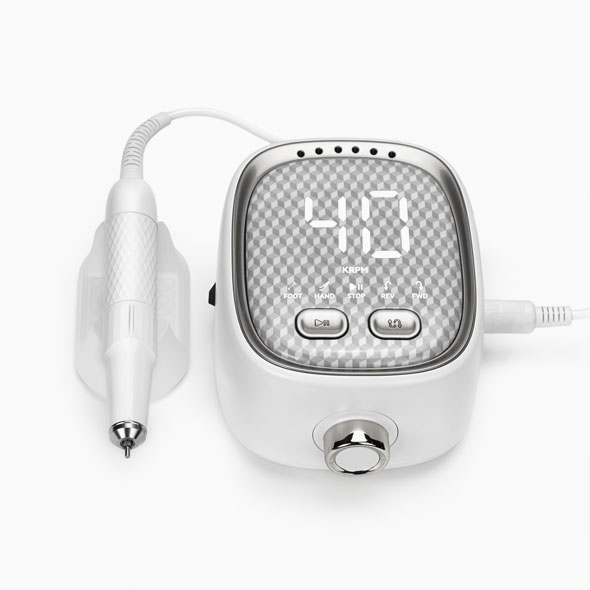
Elesecret ES-417 nail drill with digital display and handpiece
Sample Quality and Replacement Requirements
What a Sample Evaluation Can Establish
Once the dimensions match, samples help reveal differences that a catalog description cannot show. With the equipment switched off, you can identify visible deformation, an opening seam, or patchy abrasive coverage before a trial. A fit assessment establishes whether the specified sleeve seats on its intended holder as described in the fitting instructions.
A trained technician's evaluation, guided by the supplier's operating instructions, then adds information about retention and consistency during the intended task. Slipping or abnormal behavior means the combination needs investigation; additional pressure or an improvised speed setting is not evidence of a correct fit. Comparing the same task with the same handpiece and mandrel makes observations about different bands more meaningful. A successful sample is a reference for purchasing, not proof that every later batch will perform identically.
Why Bands and Mandrels Have Different Handling Needs
The replaceable sleeve and reusable holder have separate handling requirements. NSI specifies a fresh band for each salon customer. Mandrel cleaning instructions do not state that its abrasive sleeve can be cleaned and reused.
Replacement frequency also affects purchasing. Where the product requires a fresh band for each customer, refill planning follows the number of relevant services, while mandrel replacement follows its own condition and instructions. This distinction gives a salon a more useful stock plan than treating bands and holders as consumables with the same turnover.
A Consistent Kit and Refill Specification
The Details Behind a Reliable Reorder
A useful reorder record identifies the band supplier and item code, grit, dimensions, matched mandrel, handpiece version, and pack quantity. Handling instructions belong with that record. Separate band and mandrel entries let customers replenish the abrasive without accidentally ordering another holder or an incomplete starter kit.
For a small distributor, this also supports clearer listings: customers can see what is included, which holder is required, and how to find the corresponding refill. The specification connects the original selection to the product received on the next order.
Elesecret Equipment and Accessory Inquiries
For an Elesecret equipment order, mandrel compatibility and accessory availability are two separate questions. A proposed third-party band is not automatically part of the supplied package. The selected drill, handpiece, and accessory details allow those questions to be resolved for the actual order.
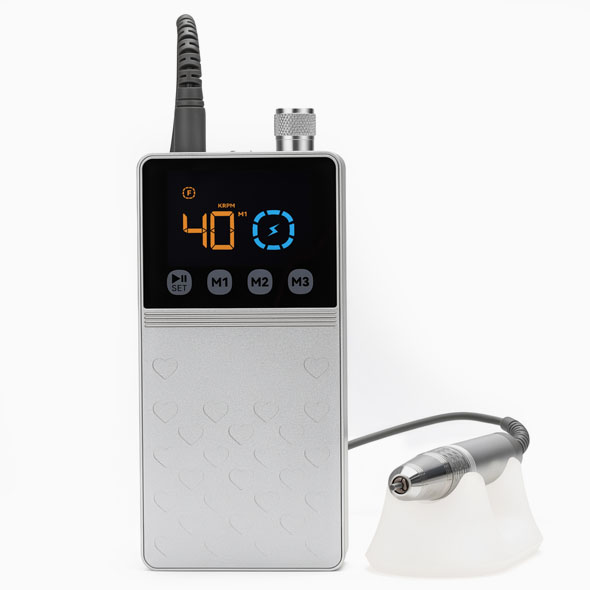
Elesecret ES-230 nail drill with digital display and handpiece holder
Elesecret Nail Drill range and Supporting Tools collection provide starting points for equipment and accessories. An inquiry that includes the preferred drill model, band dimensions, intended grit grades, and quantity gives the supplier a concrete combination to assess. Elesecret's starting equipment MOQ is 100 units; accessory quantities and packaging are confirmed separately in the quotation.