
Can You Use a UV Lamp on Regular Nail Polish?
Tutorial
No. A UV/LED nail lamp does not cure regular air-drying nail polish. It is used with products formulated for light curing. For salons and nail-equipment sellers, understanding that difference helps explain why a lamp is useful for some services and unnecessary for others.
Can a UV/LED Lamp Dry Regular Nail Polish?
Air Drying and Light Curing
Regular nail lacquer dries as its solvents evaporate. In gel polish, photoinitiators respond to suitable light and start the reaction that hardens the coating.
This also explains why a lamp can work with a gel service but appear ineffective when the same technician uses ordinary lacquer. The coating has changed, even though the equipment has not. That difference matters before a salon treats the result as a lamp fault or a seller recommends a replacement.
Why More Lamp Time Does Not Solve the Mismatch
Extra time under a lamp does not turn air-drying lacquer into a light-curable product. Nor does higher wattage mean a lamp can dry ordinary polish. A timer reaching zero confirms only that the selected cycle has ended; it does not confirm the coating's condition.
For ordinary lacquer, a longer UV/LED timer setting does nothing to change how the polish dries. The directions on the bottle tell the technician whether the service requires air drying or light curing.
Regular Polish, Gel-Like Polish and Gel Polish
What Gel-Like Means on a Product Label
A gel-like finish describes a coating's appearance. Even a high-gloss lacquer can be formulated to air-dry. The application directions determine whether the service calls for a lamp.
The distinction is particularly useful when a retailer stocks several ranges from the same brand. The brand name identifies the supplier, while the exact range and application instructions identify the process. Those details belong together in a product description or customer inquiry.
Instructions That Define the Curing Method
The product's application directions provide a more reliable distinction than its gloss, color, or bottle design:
|
Product type |
Drying or curing method |
What it means for lamp selection |
|
Regular nail lacquer |
Air drying |
A UV/LED curing lamp is not required for this process |
|
Gel-like lacquer sold as no-cure polish |
Follow the drying or curing directions for that specific range. |
The gel-like name alone is not a reason to add a lamp |
|
Light-curable gel polish |
Curing with the lamp and procedure specified for the system |
Lamp suitability depends on the exact gel system |
Directions that name a lamp and curing schedule belong to a different workflow from directions that allow coats to air-dry. This distinction applies to base coats, top coats, and color. The method for one bottle does not establish the method for every layer in a manicure.
Common Questions About Drying and Mixed Systems
Drying Aids for Regular Polish
For ordinary lacquer, drying drops may be an option when the polish instructions allow them. The directions for the drops specify how and when to apply them.
Drying-time claims depend on the polish and finishing system. A coat can feel dry at the surface while the layers underneath are still setting. Salon staff can use the product instructions to explain when clients can resume normal use.
Gel Top Coat over Regular Polish
A light-curable top coat does not change the drying mechanism of the ordinary lacquer underneath. A mixed manicure therefore raises two separate questions: whether the lacquer has dried and whether the gel layer is being used in a supported combination. Curing the top layer is not evidence that both questions have been resolved.
For a service that layers lacquer and gel, the buyer needs the exact base, color, and top coat. The coating manufacturers’ instructions should support that combination before the salon selects a lamp or sets a curing schedule.
What This Means for Salon and Retail Lamp Choices
Lamp Requirements Follow the Product System
A salon offering only air-drying lacquer has no curing requirement for that service. A salon adding light-curable gel has a different equipment task: matching a lamp to the gel manufacturer's instructions. A business offering both can describe them as separate services, with different finishing processes, rather than promising that one lamp speeds up every manicure.
The same distinction improves retail advice. The exact product range is a more useful starting point than a request for a “nail polish dryer”. Once the range is identified as light-curable, the discussion can move to a suitable lamp and the way it fits the workstation. Lamp repair and replacement are separate questions, covered in our UV light bulb and replacement guide.
Elesecret Lamps and Clear Customer Expectations
The Elesecret ES-601P is a rechargeable UV/LED nail lamp with a hidden display. It gives salons or small distributors a specific model to evaluate for gel services. Rechargeability may be relevant when equipment moves between work areas, while the display and housing can be assessed for visibility and fit within the salon's presentation. These considerations follow the gel-system compatibility assessment; they do not replace it.
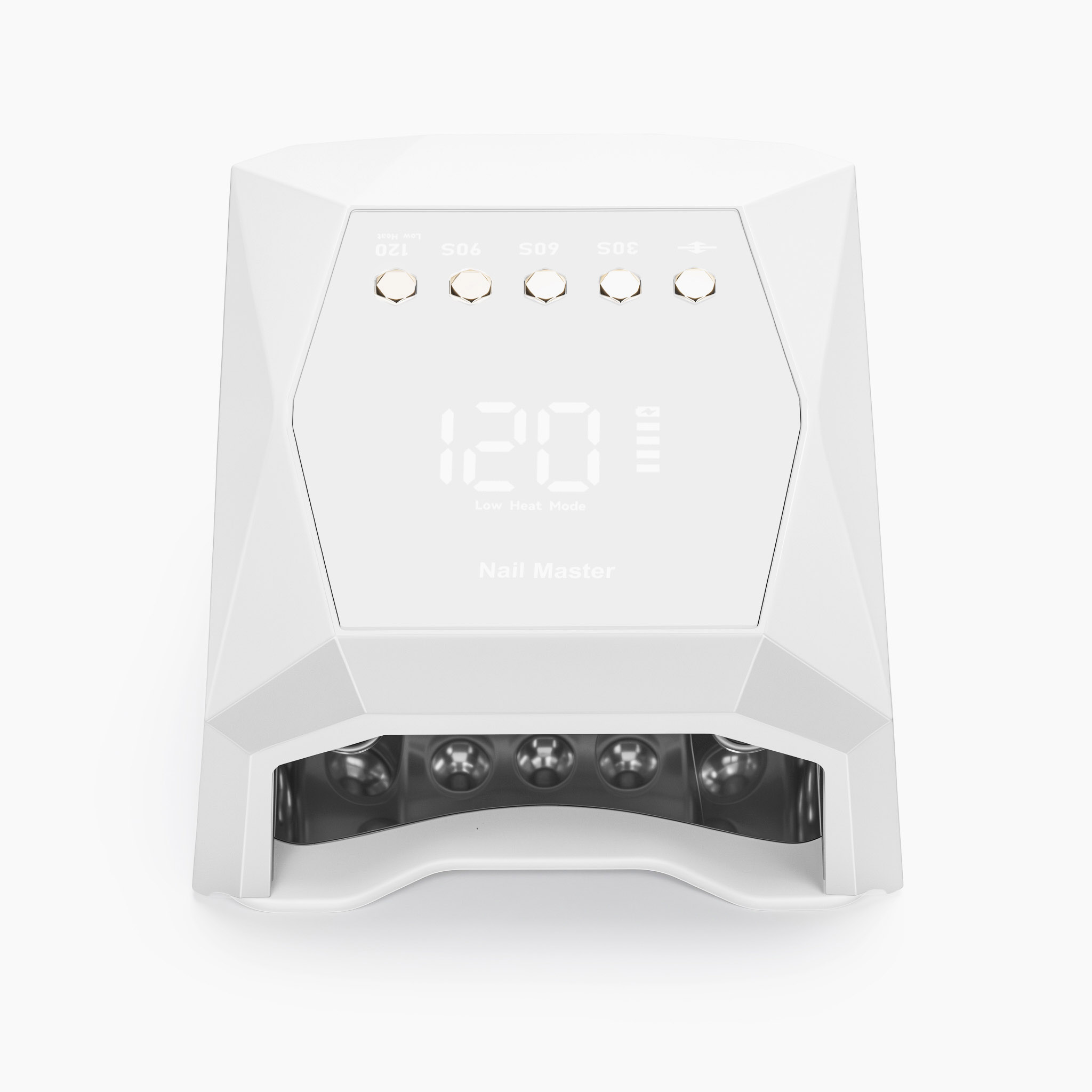
Elesecret ES-601P nail lamp with top controls and front hand opening
For a distributor building a lamp range, the product description can explain the intended gel-curing role, identify the model, and clarify the compatibility scope. Presenting the ES-601P as a way to dry ordinary lacquer would set the wrong expectation. The model page lists a minimum order of 100 units, which gives small distributors a starting quantity for planning an equipment order.
Elesecret nail lamp collection provides the starting point for that equipment discussion. An inquiry with the intended gel range, preferred lamp model, and order quantity gives Elesecret a concrete application to assess. The choice begins with what the coating requires, then considers how the equipment serves the salon.